
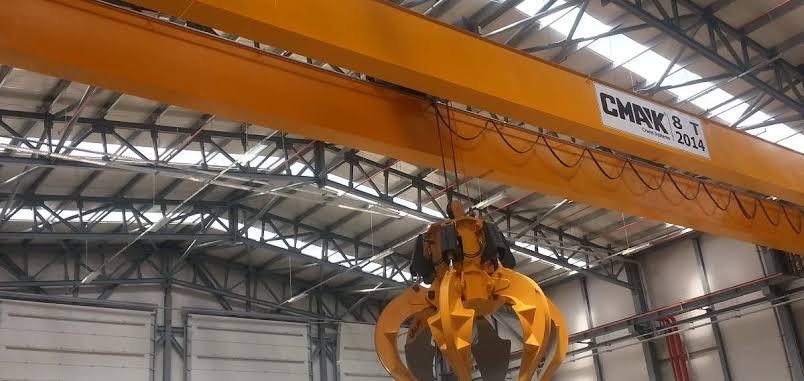
When a procurement officer requests quotes for an overhead crane, the numbers that come back rarely tell the full story. Overhead crane price in Pakistan varies so widely across suppliers that two quotes for a “5-ton single girder crane” can differ by 40 to 60 percent, yet cover completely different specifications, component quality, and installation scope. Understanding what drives that variation is the only way to make a sound purchasing decision.
The challenge is that most suppliers present a single bottom-line figure without breaking down what it includes. As a result, buyers end up comparing prices that are not actually comparable. One quote may include runway beams, electrical installation, and commissioning. Another may cover only the crane itself. Without clarity on these distinctions, the cheaper quote often becomes the more expensive project.
This article breaks down the real cost components behind overhead crane pricing in Pakistan, explains what drives price differences across crane types and suppliers, and helps you evaluate whether a quote reflects genuine value or hidden compromises.
Table of Contents
- Why Overhead Crane Prices in Pakistan Vary So Widely
- Price Ranges by Crane Type in Pakistan’s Current Market
- The Hidden Cost Components Most Quotes Leave Out
- How Component Quality Affects Overhead Crane Price in Pakistan
- Industry-Specific Cost Considerations: Textile and Sugar Mill Applications
- Common Buyer Questions on Crane Pricing and Value
- How to Evaluate a Quote Before You Commit
1. Why Overhead Crane Prices in Pakistan Vary So Widely
The overhead crane market in Pakistan includes domestically fabricated systems, imported Chinese equipment, European-origin machinery, and hybrid configurations that mix components from multiple sources. Consequently, price differences between quotes often reflect fundamentally different products, even when the capacity and type appear identical on paper.
Component Origin and Grade
The single largest driver of price variation is component origin. A hoist sourced from a certified manufacturer with documented load ratings costs significantly more than a generic unit with no traceable specification. Similarly, motor quality, end carriage steel grade, and control system type all vary by supplier and all affect both price and long-term reliability.
Scope Differences Within Quotes
Beyond component quality, scope differences account for a large portion of price variation. Some suppliers quote crane supply only, while others include runway beam supply, civil anchor work, electrical cabling, commissioning, and load testing. Therefore, a quote that appears 30 percent cheaper may simply exclude work that will need to be done by someone else at additional cost.
Market Conditions in Pakistan
Currency fluctuation, import duties on crane components, and steel price movement all affect overhead crane price in Pakistan in real time. Suppliers who import hoists and controls from Europe or Japan absorb currency risk differently than those sourcing domestically or from China. As a result, price levels shift across quarters, and quotes obtained six months apart may reflect very different market conditions.
2. Price Ranges by Crane Type in Pakistan’s Current Market
The table below provides indicative price ranges for common crane types in Pakistan. These figures reflect supply-only pricing for standard configurations and exclude runway structure, installation, and electrical work unless noted.
| Crane Type | Capacity | Indicative Price Range (PKR) | Notes |
|---|---|---|---|
| Single Girder | 1 to 5 tons | 700,000 to 1,400,000 | Standard span, basic controls |
| Single Girder | 5 to 20 tons | 1,400,000 to 3,500,000 | Increases with span and duty class |
| Double Girder | 10 to 30 tons | 3,500,000 to 9,000,000 | Hoist type significantly affects price |
| Double Girder | 30 to 100 tons | 9,000,000 to 25,000,000+ | Custom engineering required |
| Gantry Crane | 5 to 50 tons | 2,500,000 to 12,000,000 | Ground rail civil work adds to total |
| Jib Crane | Up to 3 tons | 400,000 to 1,000,000 | Wall or column mount affects scope |
| Monorail System | Up to 10 tons | 800,000 to 2,500,000 | Track length drives total cost |
Learn more: Overhead crane types at Orica Engineering
These ranges are starting points, not fixed prices. In practice, span width, lift height, duty class, hoist specification, and control type all move the final number. Furthermore, installation cost typically adds 15 to 30 percent on top of crane supply price depending on site complexity.
3. The Hidden Cost Components Most Quotes Leave Out
A quote that covers the crane unit alone is incomplete. However, many buyers discover the additional cost items only after committing to a supplier. Understanding what a complete project costs prevents budget shortfalls at the installation stage.
Runway Structure and Civil Work
If your facility does not have an existing crane runway, the supplier must design and supply runway beams, columns or brackets, rail, and end stops. This work can add PKR 500,000 to several million depending on bay span, column height, and structural load requirements. Consequently, always ask whether the quote includes runway structure or assumes an existing one.
Electrical Installation and Cabling
Connecting the crane to your facility’s power supply, running festoon cable or conductor bar, and installing pendant or remote control systems all require electrical work. Some suppliers include this in their scope. Others treat it as a separate contract. Therefore, confirm explicitly what the electrical scope covers before accepting a quote.
Commissioning and Load Testing
A properly commissioned crane goes through no-load trials, full-load testing, limit switch verification, and safety device checks before it enters service. This work takes time and should be included in the project scope. Additionally, some industries and insurance requirements mandate third-party load testing certification, which adds further cost.
Warranty and After-Sales Terms
Warranty scope affects the true cost of ownership. A crane with a 12-month comprehensive warranty covering parts and labour costs less to operate in year one than a cheaper crane with a 90-day parts-only warranty. As a result, factor warranty terms into your total cost comparison, not just the initial price.
4. How Component Quality Affects Overhead Crane Price in Pakistan
Two cranes with identical capacity and span can differ dramatically in price based entirely on the components used. Understanding the key quality variables helps you assess whether a price difference reflects genuine specification difference or supplier margin.
Hoist Quality and Duty Rating
The hoist is the most critical and failure-prone component in an overhead crane. Hoists are rated by duty class, which defines how many lifts per hour and how many operating hours per year the unit can sustain before requiring major service. A hoist rated for FEM 3m or ISO M5 duty costs more than a light-duty unit but lasts significantly longer in high-cycle environments. In textile mills running continuous shifts, for instance, specifying the wrong duty class means the hoist fails within two to three years rather than ten.
Motor and Gearbox Specification
Motor brand, insulation class, and protection rating all affect price and longevity. An IP55-rated motor in a dusty textile environment costs more than a standard IP44 unit but prevents premature failure from ingress. Similarly, a helical gearbox from a documented manufacturer offers more reliable performance than an undocumented cast unit, even if both carry the same load rating.
Structural Steel Grade
Bridge girder and end carriage fabrication quality varies between suppliers. Certified steel grades, proper weld inspection, and correct beam sizing for the duty class all add cost at the fabrication stage. However, they prevent structural fatigue and deformation over the crane’s service life.
Learn more: Double Girder Cranes at Orica Engineering
5. Industry-Specific Cost Considerations: Textile and Sugar Mill Applications
Different industries carry different cost implications beyond the standard crane specification. Therefore, understanding what your sector adds to the base price helps you budget accurately from the start.
Textile Mill Applications
Textile mills in Punjab, particularly in Faisalabad and Lahore, operate cranes in high-dust environments with continuous multi-shift schedules. As a result, motors require IP55 or higher protection, hoists must carry a duty class appropriate for high daily lift cycles, and all electrical components need dust-resistant enclosures. These requirements add 10 to 20 percent to the base price compared to a standard warehouse crane of the same capacity.
Additionally, textile facilities often need cranes that can be installed and commissioned without extended production shutdowns. This requirement places a premium on suppliers who can execute installation efficiently and who bring their own skilled installation team rather than relying on local contractors unfamiliar with the site.
Sugar Mill Applications
Sugar mills in central Punjab operate in seasonal campaigns where crane downtime during crushing season is unacceptable. Consequently, cranes installed in boiler houses and maintenance bays must be specified for heat exposure, and spare parts availability must be confirmed before purchase. A crane that comes with a 6-week import lead time on hoist components creates significant risk during a time-critical campaign.
Furthermore, sugar mill environments involve exposure to moisture, dust, and corrosive vapors in certain areas. Specifying appropriate protection classes and corrosion-resistant coatings adds to the initial price but avoids accelerated deterioration and unplanned replacement.
6. Common Buyer Questions on Crane Pricing and Value
Is a Cheaper Crane Ever the Right Choice?
Sometimes. A light-duty jib crane for an infrequent maintenance application does not need the same specification as a production crane running eight hours a day. The key is matching specification to actual operating requirements. Overspending on a crane for a low-cycle application wastes capital, just as underspending on a high-cycle production crane creates maintenance and replacement costs that exceed the initial saving.
Should You Buy Local or Import?
Both options have merit depending on the application. Domestically fabricated cranes offer faster delivery, easier customization, and simpler spare parts access. Imported cranes from established manufacturers offer documented specifications and proven component quality. In practice, many of the better overhead crane suppliers in Pakistan combine both: locally fabricated structures with imported hoists and controls. This approach balances cost, lead time, and quality effectively.
What Does Maintenance Cost Annually?
Annual maintenance cost for a standard industrial overhead crane typically runs between 2 and 5 percent of the initial purchase price, depending on duty intensity and operating environment. This covers wire rope inspection and replacement, hoist service, lubrication, electrical checks, and runway rail alignment. Suppliers who offer structured preventive maintenance programs often provide more predictable annual costs than those who offer no ongoing service.
Learn more: Single Girder Cranes at Orica Engineering
7. How to Evaluate a Quote Before You Commit
Receiving a quote is only the beginning of the evaluation process. Before you compare prices across suppliers, confirm that each quote covers the same scope, specification, and terms.
Check Scope Line by Line
Ask each supplier to confirm whether their quote includes runway structure, electrical installation, commissioning, and load testing. If it does not, request a separate price for each item. Only then can you compare the true total project cost across suppliers.
Confirm Component Specification in Writing
Ask the supplier to state the hoist manufacturer, motor brand, duty class, and steel specification in the quote document. A supplier who cannot or will not provide this information is leaving room for substitutions after the order is placed. Consequently, require component detail as a condition of accepting any quote.
Verify Installation Capability
Ask specifically whether the supplier’s own team handles installation or whether they subcontract it. Crane installation quality directly affects long-term performance and safety. Therefore, a supplier who controls installation with trained personnel reduces your risk compared to one who hands the work to an unvetted contractor.
Review Warranty Terms Carefully
Compare warranty duration, what the warranty covers, and how the supplier handles breakdowns during the warranty period. Ask specifically what the response time commitment is and which spare parts the supplier stocks locally. A supplier who stocks critical spare parts locally and commits to a defined response time offers more value than one who provides only a paper warranty without service infrastructure.
Learn more: Contact Orica Engineering for a detailed quote
Conclusion
Overhead crane price in Pakistan is not a single number. It reflects crane type, component quality, scope of supply, installation capability, and after-sales support. Two quotes for the same crane type can be entirely different products when evaluated properly. As a result, the lowest price rarely represents the lowest total cost of ownership.
The right approach is to define your specification clearly, require full scope and component detail from every supplier, and evaluate total project cost rather than unit price alone. Orica Engineering provides fully specified overhead crane solutions across Pakistan, from initial engineering through installation, commissioning, and ongoing support. Contact the Orica Engineering team to get a detailed, transparent quote for your facility’s requirements.