
In the world of heavy industry, construction, and logistics, moving massive loads efficiently and safely is a non-negotiable requirement. While forklifts and overhead cranes have their place, nothing offers the combination of mobility, lifting capacity, and flexibility quite like a gantry crane. This workhorse of material handling is a common sight in shipyards, warehouses, and fabrication shops worldwide. But what exactly is a gantry crane, and how do you know which one is right for your project or facility?
This definitive guide goes beyond the basics. We will dissect the anatomy of a gantry crane, explore its various types and applications in-depth, and provide a critical, often-missed framework for selecting the perfect system for your needs. Whether you’re a project manager, plant engineer, or business owner, this article will equip you with the knowledge to make an informed decision that boosts your operational efficiency and safety.
What is a Gantry Crane? Understanding the Core Concept
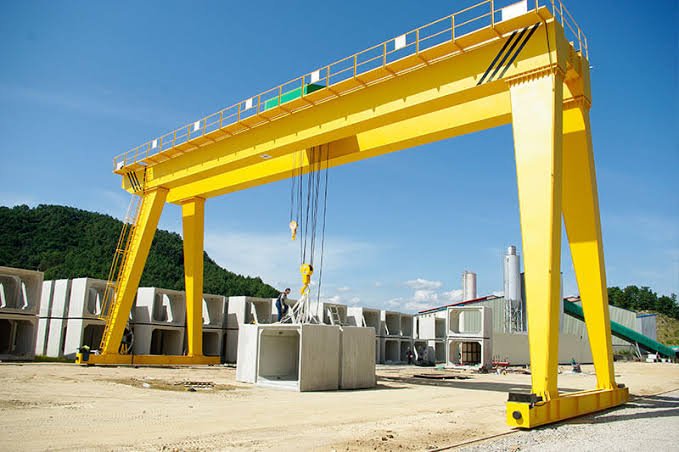
A gantry crane is a type of crane built atop a gantry, which is a structure supported by uprights that move on wheels, rails, or along a track system. Unlike overhead bridge cranes that run on rails fixed to a building’s structure, a gantry crane is typically supported by the ground or a floor-mounted system, making it highly versatile and often portable.
The core components of a standard gantry crane include:
- Legs (Uprights): Two vertical supports that hold the bridge in place. These can be fixed-height or adjustable.
- Bridge (Girder): The horizontal beam that spans the work area. It travels along the runways to cover the length of the bay.
- Hoist and Trolley: The hoist is the lifting mechanism, which moves side-to-side across the bridge via the trolley.
- Runway: The path, often comprised of rails or tracks, on which the entire crane moves.
- End Trucks: The assemblies located at the ends of the bridge that contain the wheels, motors, and drives for moving the crane.
This design allows the gantry crane system to lift, transport, and precisely position heavy objects within a defined rectangular area, making it indispensable for countless tasks.
Types of Gantry Cranes: A Detailed Breakdown
Not all gantry cranes are created equal. The right choice depends entirely on your application, space, and load requirements. Here, we explore the common types, including nuances competitors often miss.
1. Full Gantry Cranes
This is the classic, heavy-duty design where the bridge is supported by two or more legs that run on fixed rails embedded in the ground. They are characterized by their massive load capacity (often exceeding 100 tons) and are a permanent fixture in settings like shipbuilding and large-scale steel fabrication.
2. Semi-Gantry Cranes
A semi-gantry crane features one leg that runs on a ground-level rail, while the other end of the bridge is supported by a runway attached to a building column or structure. This hybrid design is ideal for facilities where floor space is limited or where a full gantry setup is impractical, offering a excellent balance of capacity and space-saving.
3. Portable Gantry Cranes (Adjustable)
These are the most flexible and widely used type in workshops, warehouses, and loading docks. Portable gantry cranes are typically lightweight, feature adjustable height and width, and run on swivel casters instead of fixed rails. They are designed for moving loads around a facility rather than serving a fixed bay. Their capacity is generally lower, making them perfect for machinery relocation, maintenance work, and engine hoisting.
4. Rubber-Tired Gantry Cranes (RTGs)
A powerhouse of the shipping container industry, RTGs are massive, self-propelled cranes that run on rubber tires instead of rails. They are used in container yards to stack containers and load them onto trucks or trains. Their mobility allows for a high density of container storage, a critical insight for logistics managers that many general articles overlook.
5. Container Gantry Cranes (Ship-to-Shore)
These are the behemoths you see at port terminals. While often just called “gantry cranes,” their proper name is container or ship-to-shore (STS) cranes. They are designed specifically to load and unload containers from massive cargo ships. Their immense size and specialization place them in a category of their own for marine logistics.
Key Applications and Industries for Gantry Cranes
The versatility of gantry crane systems makes them critical assets across a diverse range of sectors:
- Manufacturing & Fabrication: Moving raw materials (steel plates, coils), positioning heavy machinery, and handling large fabricated parts.
- Shipping & Logistics: The domain of RTGs and STS cranes for managing container flow in ports and intermodal yards.
- Construction: Precast concrete handling, bridge building, and positioning large structural elements like girders and trusses. A construction gantry crane is often a temporary structure designed for a specific project phase.
- Aerospace: Lifting and positioning aircraft components and engines with extreme precision during assembly and maintenance.
- Railroad: Lifting entire locomotives and railcars for maintenance and repair.
- Warehousing: Efficiently moving heavy palletized goods and loading/unloading trucks where overhead cranes are not available.
Critical Factors for Choosing the Right Gantry Crane
Selecting a gantry crane is a significant investment. This decision-making framework, often glossed over, ensures you consider all variables.
1. Capacity and Span
This is the starting point. You must know the maximum weight you need to lift (capacity) and the required distance between the crane’s legs (span). Always choose a crane with a capacity rated higher than your heaviest load to account for the weight of the lifting attachments (slings, magnets, etc.) and to provide a safety margin.
2. Lift Height and Clearance
Determine how high you need to lift the load. The lift height is the distance from the floor to the hoist hook when it’s in its highest position. Consider overhead obstructions like lights, sprinkler systems, and roof trusses.
3. Mobility and Runway Requirements
- Fixed Rails: Offer the greatest stability and capacity for permanent, high-use applications.
- Rubber Tires (RTGs): Provide ultimate mobility for large, open areas like container yards.
- Swivel Casters (Portable): Best for flexibility within a facility on smooth, hard surfaces.
4. Power Source
- Electric (Pendant/Radio Control): The most common for indoor use. Offers clean operation and precise control.
- Diesel/Hydraulic: Used for outdoor applications or where electricity is not readily available, such as on remote construction sites.
5. Environment and Duty Cycle
This is a crucial but frequently missed consideration. The operating environment dictates critical features.
- Indoor vs. Outdoor: Outdoor cranes require weather-resistant coatings and components.
- Corrosive Environments: (e.g., chemical plants, marine applications) require special paints (epoxy coatings) and often stainless steel components.
- Duty Cycle: How often and how intensely will the crane be used? A crane in near-constant use needs a higher duty class (e.g., CMAA Class D or E) with more robust motors and components than one used occasionally.
The Oria Engineering Advantage: Your Partner in Lifting Solutions
Choosing and integrating a gantry crane is more than a purchase; it’s a strategic investment in your operation’s productivity and safety. It requires deep technical expertise to navigate the specifications, regulations, and installation complexities. This is where a specialized partner like Oria Engineering becomes invaluable.
Oria Engineering is not just an equipment supplier; we are engineered solutions providers. Our approach ensures your gantry crane system is a perfect fit for your unique challenges:
- Consultation & Design: Our engineers work with you to analyze your needs, recommending the optimal type, capacity, and configuration for your facility and workflow.
- Quality Equipment: We provide robust, reliable cranes built to relevant safety standards (ASME, OSHA, CMAA), ensuring longevity and safe operation.
- Customization & Fabrication: We understand that off-the-shelf rarely fits perfectly. Our fabrication expertise allows us to customize cranes for special applications, unusual spans, or unique environmental conditions.
- Nationwide Support: From professional installation and commissioning to ongoing maintenance, inspection, and repair services, we ensure your system operates at peak performance throughout its entire lifecycle.
Definitive Summary
Gantry cranes are indispensable tools that provide a unique combination of heavy lifting power, mobility, and spatial flexibility. From the portable models in a mechanic’s shop to the giants shaping our global supply chains in ports, their applications are vast and critical. Understanding the different types—full, semi, portable, RTG, and container—is the first step. The critical second step is a meticulous selection process that considers capacity, span, environment, and duty cycle to ensure a safe, efficient, and profitable investment.
Call to Action
Ready to elevate your material handling capabilities? A well-designed gantry crane system from Oria Engineering will streamline your operations, enhance safety, and provide a rapid return on investment.
Don’t leave this critical decision to chance. Contact the lifting experts at Oria Engineering today for a free, no-obligation consultation. Let us help you navigate the specifications and design a solution that lifts your business to new heights.
Visit our Gantry Crane Solutions Page or Contact Our Engineering Team Directly to discuss your project requirements.