
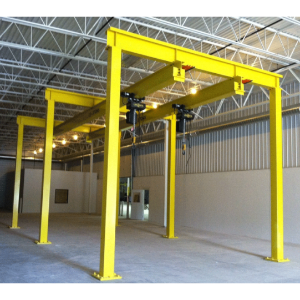
Overhead Crane Suppliers in Pakistan: Custom Lifting Solutions for Textile and Steel Industries
When a textile mill in Faisalabad needs to move 10-ton fabric rolls across a production floor, or a steel fabrication plant in Lahore requires a heavy-duty lifting system for daily structural work, the choice of overhead crane suppliers in Pakistan directly determines whether the operation runs smoothly or faces costly downtime. Furthermore, sourcing the wrong crane, or choosing a supplier without local engineering support, creates problems that go far beyond the initial purchase.
Pakistan’s industrial sector has grown significantly, and so has the range of crane suppliers claiming to serve it. However, not all of them can deliver custom lifting solutions that match the specific demands of textile processing, steel manufacturing, sugar milling, or pharmaceutical production. The gap between a supplier who sells a crane and one who engineers a complete lifting system for your facility is significant.
This article covers how to identify capable overhead crane suppliers in Pakistan, which crane types suit textile and steel applications, what customization options matter, and how to evaluate a supplier before committing.
Table of Contents
- Why Textile and Steel Industries Need Custom Crane Solutions
- Overhead Crane Types Offered by Suppliers in Pakistan
- Crane Type Comparison: Textile vs. Steel Industry Applications
- What Custom Lifting Solutions Actually Include
- How to Evaluate Overhead Crane Suppliers in Pakistan
- Buyer Questions: Cost, Lead Time, and After-Sales Support
- What Sets a Reliable Supplier Apart
1. Why Textile and Steel Industries Need Custom Crane Solutions
Standard catalog cranes rarely fit complex industrial environments without modification. In fact, textile mills and steel plants present very different challenges, and both demand more than a basic off-the-shelf purchase.
Textile Manufacturing Requirements
In textile manufacturing, cranes operate in environments with fiber dust, high ambient temperatures, and continuous multi-shift cycles. As a result, the lifting system must carry heavy yarn beams, fabric rolls, and machinery components without interrupting production. Moreover, duty class, motor protection ratings, and track span must match the actual bay dimensions and load cycles, not general industry averages.
Steel Fabrication Requirements
In steel fabrication and structural manufacturing, cranes handle coils, beams, and heavy billets in environments with heat, scale, and significant vibration. Consequently, a double girder crane lifting 30 tons in a steel plant requires precise hook height clearance, robust end carriage design, and a hoist rated for the actual daily lift frequency, not just peak capacity.
Overhead crane suppliers in Pakistan who understand these sector-specific demands can configure the right system from the start. Those who do not, however, will sell you a crane that works on paper but underperforms or fails prematurely in practice.
2. Overhead Crane Types Offered by Suppliers in Pakistan
Reputable suppliers carry a range of crane types, and each serves a distinct function. Therefore, knowing which type fits your application before approaching a supplier puts you in a stronger position during specification and negotiation.
Single and Double Girder Cranes
Single girder overhead cranes use one bridge beam and are suited to light to medium duty applications up to around 20 tons. They cost less than double girder systems and, as a result, work well in textile warehouses, light fabrication shops, and general manufacturing bays with standard headroom.
Double girder overhead cranes, on the other hand, support heavier loads, typically from 10 tons upward, and offer greater hook height because the hoist sits on top of the girders. Steel plants, heavy fabrication facilities, and foundries rely on these for daily high-cycle lifting.
Gantry, Jib, and Monorail Cranes
Gantry cranes run on ground-level rails rather than overhead runways. They suit outdoor steel yards, precast concrete facilities, and any setting where installing an overhead runway structure is impractical or too costly.
Jib cranes, by contrast, rotate within a fixed arc and serve individual workstations. They work well at machine loading points, assembly benches, and maintenance bays where a full overhead system is not justified.
Monorail cranes, finally, follow a fixed track and handle repetitive material flow along a defined production path. Textile finishing lines and food processing facilities often use them to move loads from station to station.
Learn more: Full overhead crane range at Orica Engineering
3. Crane Type Comparison: Textile vs. Steel Industry Applications
The table below helps narrow down crane type selection based on the two primary industries this article addresses. Additionally, the key consideration column highlights the most critical specification factor for each type.
| Crane Type | Capacity Range | Textile Industry Fit | Steel Industry Fit | Key Consideration |
|---|---|---|---|---|
| Single Girder | Up to 20 tons | High: fabric rolls, yarn beams, machinery | Moderate: light fabrication only | Duty class for shift intensity |
| Double Girder | 10 to 500+ tons | Moderate: heavy machinery lifts | High: coils, billets, structural beams | Hook height and hoist specification |
| Gantry Crane | 5 to 200+ tons | Low: rarely needed indoors | High: outdoor steel yards, storage | Ground rail installation required |
| Jib Crane | Up to 5 tons | High: workstation lifting | High: machine loading, maintenance | Fixed arc limits movement range |
| Monorail Crane | Up to 10 tons | High: fixed-path production lines | Moderate: defined handling routes | Track layout must match process flow |
Learn more: Single Girder Cranes | Double Girder Cranes | Gantry Cranes
Why Duty Class Matters Most
Duty class is the most commonly overlooked factor in this comparison. Specifically, FEM and ISO standards define duty classes from light to extra-heavy based on daily lift cycles and annual operating hours. For instance, a textile mill running three shifts requires a higher duty rating than a maintenance crane lifting twice a week, even if both carry the same maximum load.
4. What Custom Lifting Solutions Actually Include
When overhead crane suppliers in Pakistan advertise custom solutions, the term covers a specific range of engineering and configuration work. Therefore, understanding what it includes helps you confirm whether a supplier is genuinely customizing or simply offering a standard product with a different label.
Bay Span and Structural Matching
Bay span matching is the starting point. Crane runway span must align precisely with your facility’s column spacing. Consequently, suppliers who engineer to your drawings rather than standard spans deliver a system that fits without requiring structural modification to your building.
Hoist, Motor, and Environmental Specification
Hoist and motor selection based on actual lift frequency, load type, and environmental conditions separates a properly specified crane from a generic one. For example, in textile environments, enclosed motor housings with IP55 or higher protection prevent dust ingress. Similarly, in steel plants, hoists rated for high heat require additional thermal protection.
Control System Configuration
Control system configuration is another important customization layer. Specifically, pendant controls, radio remote operation, anti-sway systems, and variable frequency drives for smooth load handling can all be specified based on your operational requirements. Furthermore, suppliers with in-house control capabilities give you more configuration options than those who install generic factory-fitted controls.
Runway Structure Design
Runway structure design matters when your facility does not already have an existing crane runway. In that case, the supplier must calculate column loads, beam sizes, and rail specifications based on your crane’s weight and operating load, not general estimates.
Learn more: Control Systems at Orica Engineering
5. How to Evaluate Overhead Crane Suppliers in Pakistan
The market includes international brands, domestic fabricators, and trading companies who import and resell without engineering capability. As a result, evaluating suppliers on the right criteria filters out those who will create problems after the sale.
Engineering Documentation
Ask for load calculations, runway beam design, and equipment datasheets before you accept a quote. A supplier who provides these upfront demonstrates technical competence. On the other hand, one who cannot produce them is operating without proper process.
Installation Capability
Confirm the supplier’s own team handles installation, not an unfamiliar subcontractor. Crane installation involves structural alignment, electrical commissioning, and load testing. Therefore, handing this to a third party the supplier has not worked with before is a risk you absorb after signing.
Component Transparency
Ask the supplier to name the hoist manufacturer, motor brand, and control system origin in the quote. Pakistan’s crane market includes equipment from multiple origins, and quality varies widely within each category. Moreover, accepting a quote without component detail exposes you to substitutions after the order is placed.
Sector References and Spare Parts
Ask specifically for references from clients in your industry. A supplier who has commissioned cranes in textile mills understands dust protection and shift-intensity requirements. In addition, ask which components the supplier stocks locally and what lead time applies to parts sourced from abroad, because a crane sitting idle for six weeks waiting on an imported component creates more cost than the initial price saving justified.
6. Buyer Questions: Cost, Lead Time, and After-Sales Support
What Do Overhead Cranes Cost in Pakistan?
Pricing depends on capacity, type, span, height, component specification, and whether the runway structure is included. For instance, a 5-ton single girder system in a standard textile bay typically starts from PKR 900,000 to 1,600,000. A 20-ton double girder crane for a steel fabrication plant, however, will cost considerably more. Furthermore, quotes significantly below these ranges almost always reflect compromises in hoist quality, steel grade, or control specification.
How Long Does Delivery and Installation Take?
Standard crane configurations from established suppliers typically arrive within 4 to 10 weeks depending on capacity and specification. After delivery, installation takes 7 to 21 days depending on bay complexity and whether the runway structure requires civil preparation. Therefore, ask your supplier for a project timeline with clear milestones before committing.
What Does Ongoing Maintenance Involve?
Overhead cranes require periodic inspection of wire ropes, hoist mechanisms, end carriages, runway rail alignment, and electrical systems. The frequency depends on duty class and operating hours. As a result, a supplier who offers a structured preventive maintenance program and retains spare parts for the models they supply reduces your long-term risk considerably.
Can Existing Runway Beams Support a New Crane?
Not always. Existing beams must be structurally assessed for the new crane’s wheel load, span, and operating weight. Consequently, a qualified overhead crane supplier in Pakistan will conduct this assessment and advise on whether reinforcement or replacement is needed before installation proceeds.
7. What Sets a Reliable Supplier Apart
The difference between a supplier who delivers a functional long-term lifting system and one who creates recurring maintenance headaches comes down to a few consistent factors.
Core Supplier Qualities to Look For
Reliable overhead crane suppliers in Pakistan provide complete engineering documentation before installation begins, supply component details in writing, and use their own trained installation teams. Additionally, they maintain a local service presence after commissioning and match crane specification to actual operating conditions rather than general capacity figures.
Why Sector Experience Matters
For textile and steel industry buyers specifically, sector experience matters as much as product range. A supplier who has installed and serviced cranes in similar environments understands the duty requirements, environmental protection standards, and production constraints that generic suppliers miss. As a result, the commissioning process is faster, and post-installation problems are far less frequent.
Learn more: Jib Cranes | Monorail Cranes
Pre-Commitment Checklist
Before finalizing any supplier, run through these five checks:
- Has the supplier provided load calculations and equipment datasheets?
- Does the supplier’s own team handle installation and commissioning?
- Are hoist brand, motor specification, and duty class confirmed in the quote?
- Does the supplier have references from your industry or a comparable application?
- Does the supplier stock local spare parts and offer a maintenance program?
Conclusion
Choosing among overhead crane suppliers in Pakistan requires more than comparing prices on similar-sounding specifications. In fact, the crane type, duty class, component quality, installation capability, and after-sales support all determine whether your investment performs reliably for 15 to 20 years or creates problems within the first operational year.
For textile and steel industry facilities specifically, custom configuration is not optional. Your lifting system must match your bay dimensions, shift intensity, environmental conditions, and production requirements precisely. Orica Engineering supplies and installs the full range of overhead cranes across Pakistan, with engineering support from initial specification through commissioning and ongoing maintenance. Contact the Orica Engineering team to discuss your facility’s requirements and get a properly specified solution.